
Handyman Business: Start, Price and Run Your Home Repair Company
Estimates, a job assessment form, agreements, invoices and a pricing calculator built for repair lists and small projects, plus a free checklist to price your first jobs.
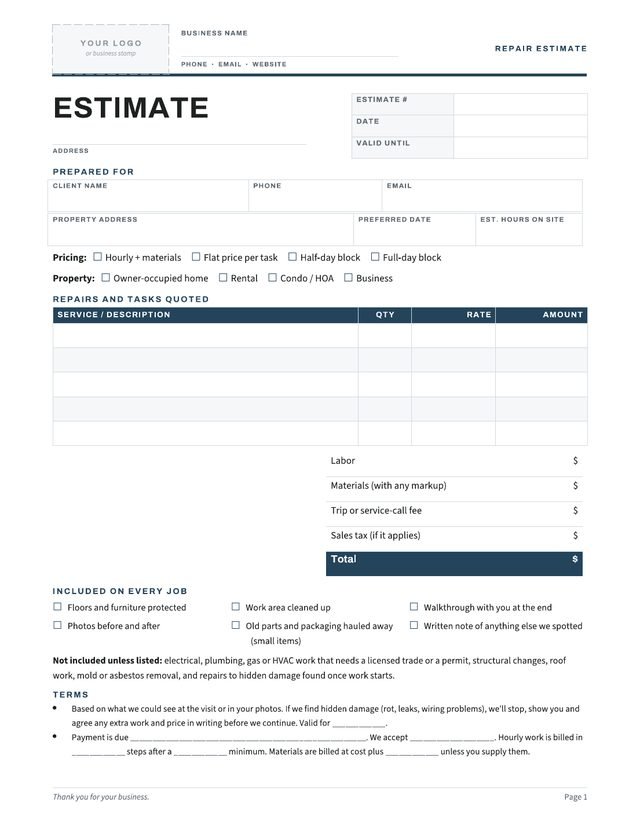
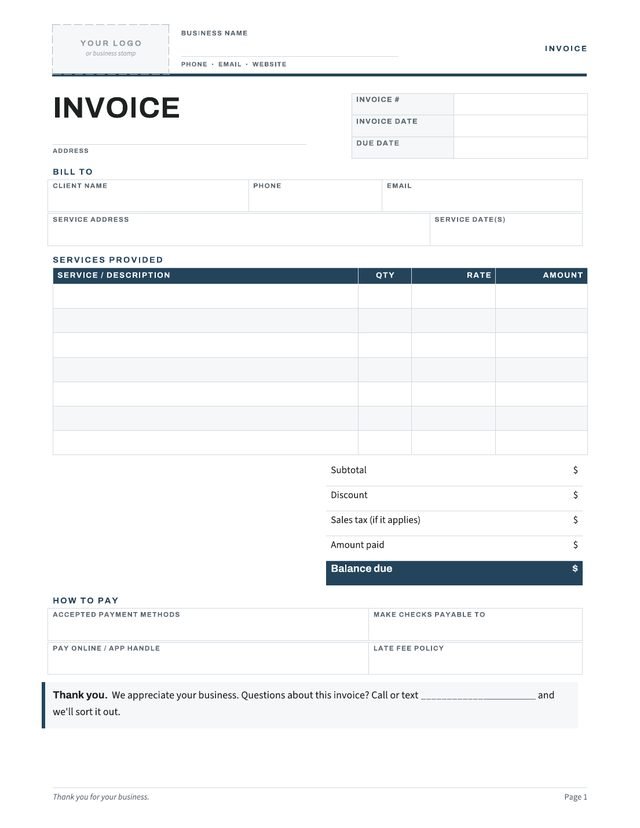
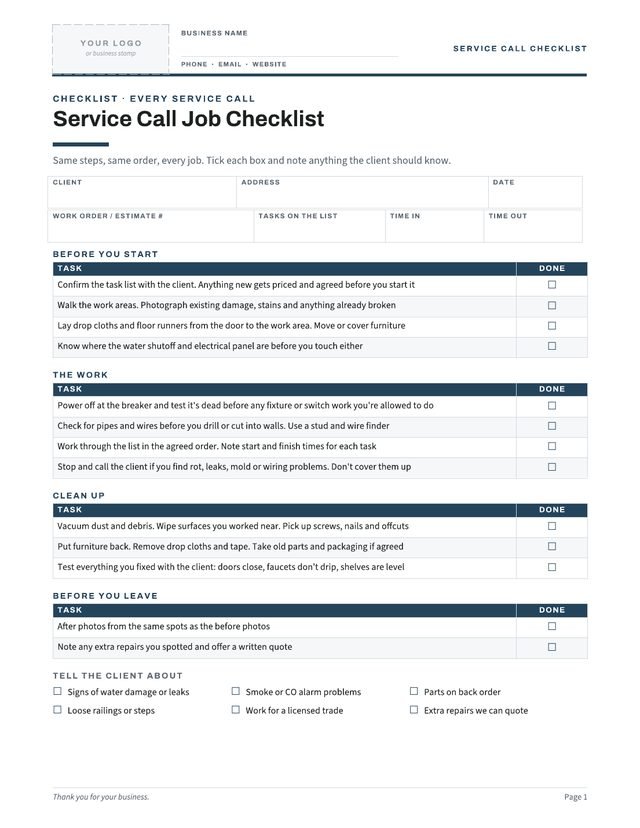

Four steps from first call to first invoice.
Price the list
Time each task, add setup, the store run and the drive, and work out your cost before you promise a number. The free worksheet below walks you through it.
Look first, write it down
Note existing damage, materials and anything that needs a licensed trade with the client before you start. It settles "that was already broken" before it comes up.
Send a real estimate
A written estimate with the tasks, price, hidden-damage terms and a sign-off line, plus an agreement for landlords and repeat work.
Fix, test, invoice
Run each job from a checklist, test every repair with the client, note your times and invoice with paperwork that matches your estimate.
Every document a new handyman business needs.
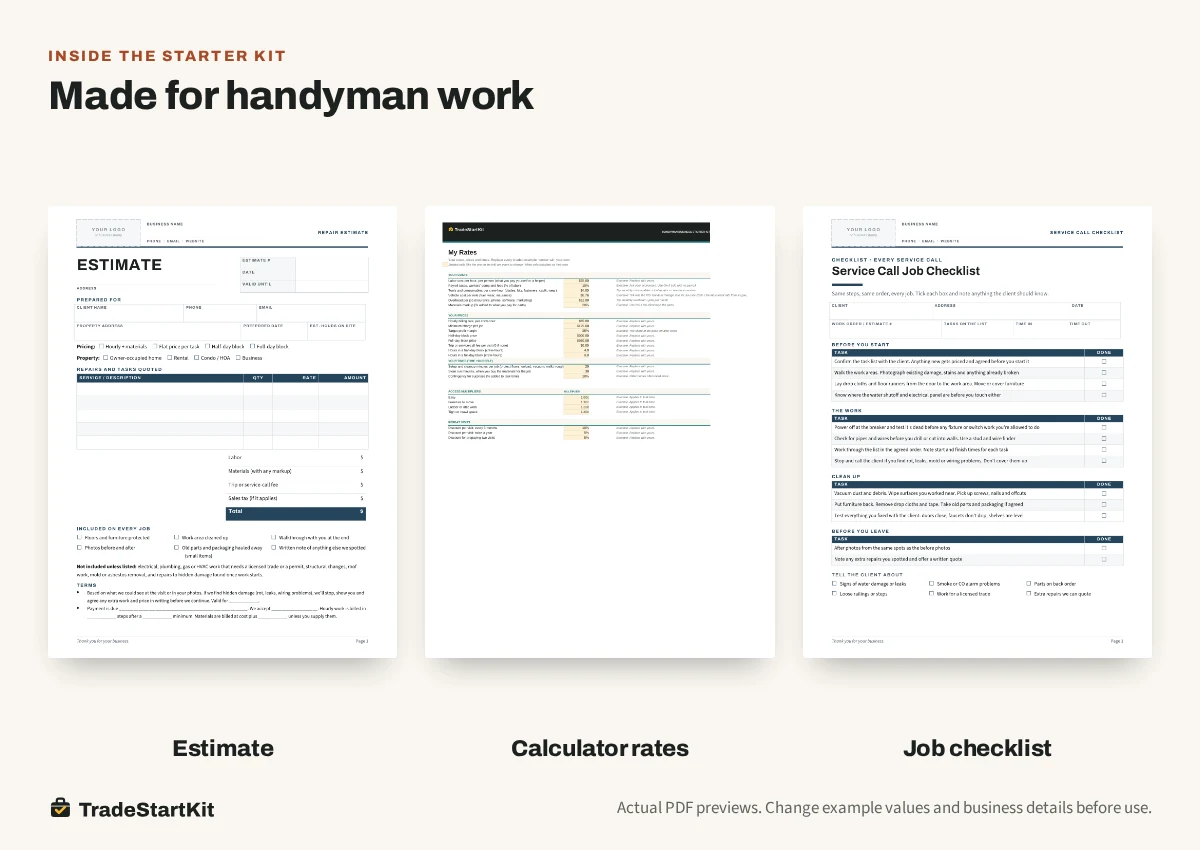
One matching set with room for your own logo. Pay once, download instantly, edit in Word, Excel or Google Docs and Sheets.
Handyman Business Starter Kit
Repair and project estimates, invoices and a receipt, a pricing calculator, 4 checklists, client and job assessment forms, residential and property maintenance agreements, a business plan and 4 SOPs. 20 editable files.
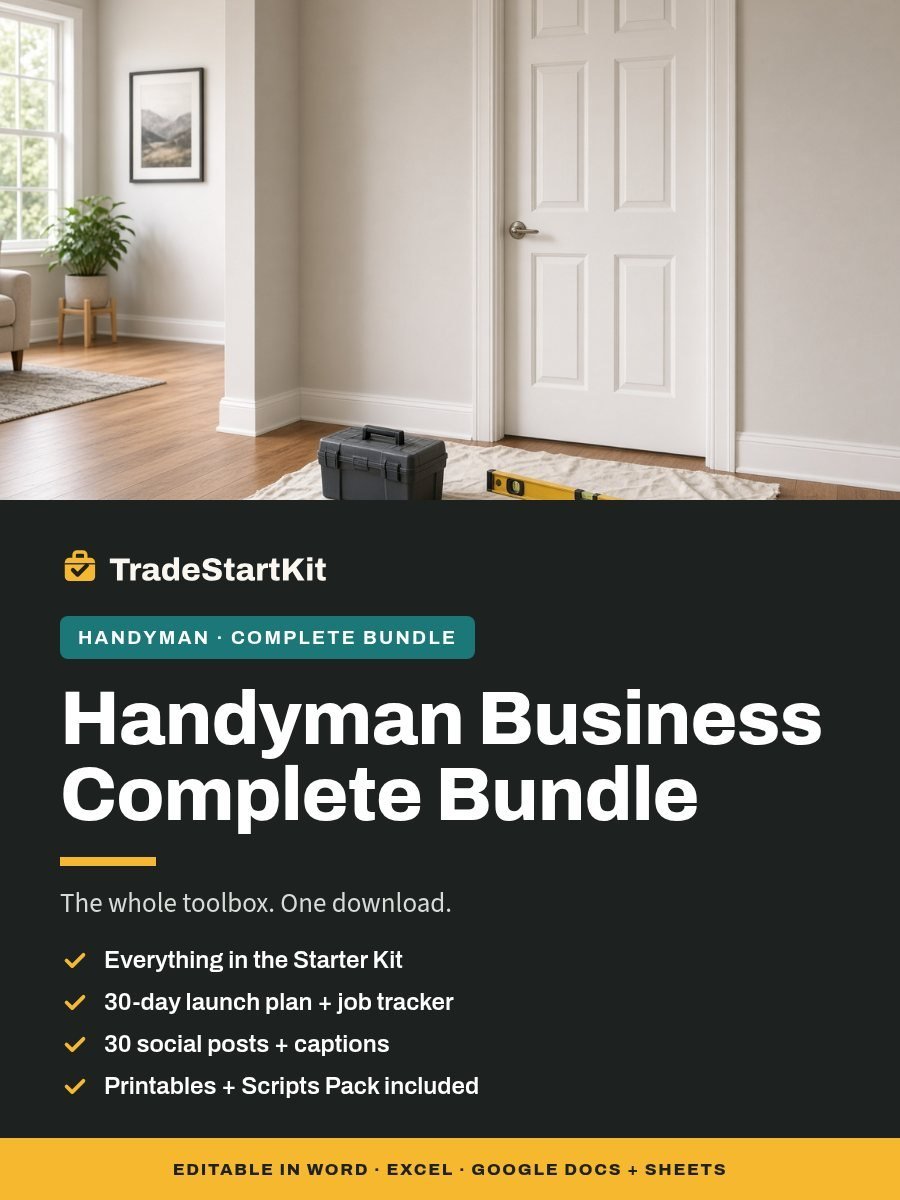
Handyman Business Complete Bundle
Everything in the Starter Kit, plus a 30-day launch plan, 30 social posts with captions (feed + Story sizes), follow-up scripts, an equipment budget, a job tracker, a gift certificate, a price menu, a flyer, a door hanger, a business card, a yard sign and the Scripts Pack.
Starting a handyman business: the first-month checklist
The short version of what to set up before your first paying repair list.
A handyman business is a practical one to start: many owners begin with the tools they already have, a vehicle and a few neighbors who need things fixed, and grow from there. What separates a side hustle from a business is usually not the tools. It’s the paperwork and the habits: a clear price, a written scope, an agreement on what happens when you find a surprise, and a routine for every job.
1. Check what you’re allowed to do
Handyman rules vary a lot. Many states set a dollar limit per job above which you need a contractor’s license, and electrical, plumbing, gas and HVAC work usually needs a licensed trade or a permit. Look up your state’s contractor licensing board and your city’s rules, then write your “we don’t do” list and refer that work out.
2. Get the basics in place
Register the business the way your state requires, get a free EIN from the IRS at IRS.gov if you need one (never pay a website for it), and ask your city or county about local licenses. Get quotes on general liability insurance before you work in anyone’s home, and keep business money in a separate account.
3. Work safely in older homes
Homes built before 1978 may have lead paint: for paid work that disturbs painted surfaces in them, the EPA’s lead-safe (RRP) rules can require certification. Older materials can contain asbestos. Call 811 before you dig, and turn off and test power before touching fixtures.
4. Price from your costs, then put it in writing
Work out what an hour of your time costs, and how long your common tasks really take. Add setup, store runs, drive time, materials, consumables and overhead, then a margin and a minimum charge. Send a written estimate the same day, and agree in writing how hidden damage will be handled before you open a wall.
5. Turn one-time jobs into repeat clients
Homes always need something. Keep a list of what you spotted on every visit, offer a seasonal or twice-a-year home check, and look after landlords and property managers. Repeat clients make your calendar much easier to fill.
General information only, not legal, tax, insurance or licensing advice. Requirements vary by state and city.
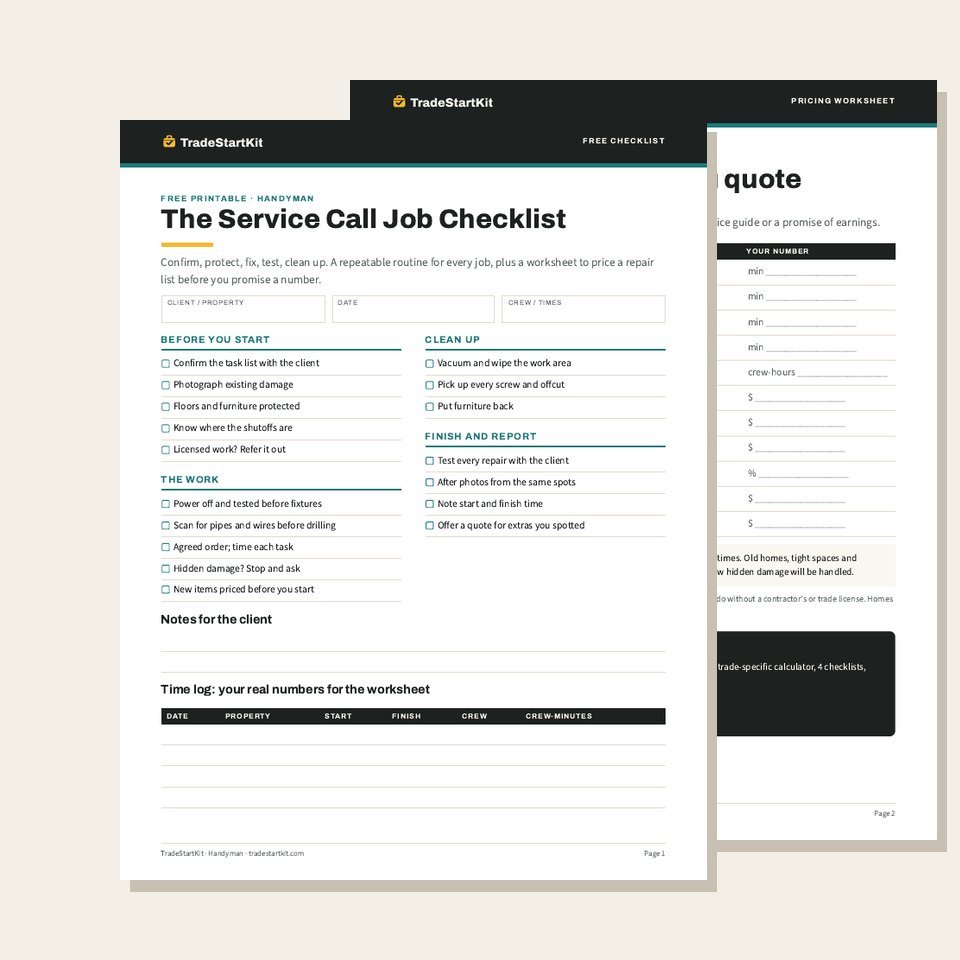
Free: the handyman checklist + pricing worksheet.
A repeatable service call checklist, plus a worksheet that prices a repair list from your own costs, time and margin. Print the PDF and use it on your next estimate.
Do I need a license to start a handyman business?
It depends on your state and city. Many places require a general business license, many states require a contractor’s license above a certain job size, and trade work like electrical and plumbing usually needs its own license. Your state’s contractor licensing board and your city or county clerk can tell you what applies.
How should I price handyman work?
Start from your own costs: time on site and driving, setup and store runs, materials, consumables, fuel and overhead, then add a margin and set a minimum charge. Compare hourly, flat-rate and half- or full-day block prices. The free worksheet on this page and the calculator in the kit walk through the same math.
Hourly or flat rate?
Many handyman businesses use both: flat prices for common tasks they’ve timed (a TV mount, a faucet swap), hourly or day blocks for longer or less predictable lists, and a minimum charge for small calls. Whatever you choose, put it in writing before you start.
Do the kit files work for landlords and property managers?
Yes. The kit includes a property maintenance service agreement covering work orders, approval limits, response times, tenant access and invoicing, and the estimates and calculator work for any job size.
Send your first repair quote looking like a pro.
Everything a new handyman business needs, ready to edit tonight. $37, one time.